
Affected by college basketball’s new landscape, a look inside the Patriot League’s uncertain future
Faced with NIL and transfer portal challenges as its best players get plucked in the offseason, can the Patriot League ever return to relevance on the national stage?


BOSTON — Sitting in an office decorated with plaques and family photos, Joe Jones’s passionate displeasure with college basketball’s current landscape is evident.
On multiple occasions, Boston University’s 15th-year head coach begins his answer before I’ve even concluded my question.
I ask Jones if he feels that some players are using mid-majors and Patriot League schools as stepping stones, a way to gain playing time before transferring to a higher level.
“Absoluuuuutely!” he says.
When I ask if college basketball’s current era, dominated by name, image, and likeness (NIL) deals and an unrestricted transfer portal, has widened the gap between power conferences and mid-majors, he again answers without a split-second of hesitation.
“Listen, man, that’s so crazy that people say that hasn’t happened,” says Jones. “Oh my god! Listen, the wealthier teams are going to get the better players. That’s just the way that it is.”
In the hierarchy of large and small athletic budgets, the Patriot League is undeniably near the bottom.
The PL became one of only two conferences to have all of its member schools opt out of direct revenue sharing, joining the Ivy League, which famously does not offer athletic scholarships. Only 54 schools across Division 1 opted out.
“We need to find out earlier in the recruiting process what’s important to the players,” says BU associate head coach Mike Quinn. “If NIL is the most important factor in a player’s decision, we’re probably not the right fit.”
In turn, the conference has seen a noticeable hit. After the NCAA authorized unlimited transfers in April 2024, the Patriot League’s best players have departed in each of the last two seasons.
The current model of roster-building, centered around the transfer portal, couldn’t be more dissimilar to the way PL programs operate. There are 169 men’s basketball players in the conference. Only eight are transfers on scholarship.
That’s indicative of the Patriot League model: recruit high school players and develop them for four seasons.
“Our program’s philosophy is a little bit more developmental in nature,” says Lehigh head coach Brett Reed, the Patriot League’s longest-tenured coach, now in his 19th season with the Mountain Hawks.
“We want to recruit young people and help them grow in their roles and responsibilities within our program. We believe that helps aid the educational mission of our university but also provides greater unity for our program, as opposed to short stints where players are transferring in or transferring out,” Reed adds.
Unity in the program, also known as continuity, is a common theme across the Patriot League.
According to Ken Pomeroy’s continuity model, which measures the percentage of a team’s minutes played by the same player from one season to the next, the PL owns the highest average continuity since 2008. At 56.1 percent, it’s just ahead of the A-10 and Big 10.
This season, nine of the Patriot League’s 10 schools rank in the top 90 in continuity. Navy, the number one team in continuity in all of Division 1 at 79.7 percent, is currently first in the PL with a 6-1 conference record. The outlier, Army at 113th in continuity (32.7 percent), is tied for last at 2-5.
“Continuity, I think that’s really, really key in today’s landscape of college basketball,” says Navy head coach Jon Perry.
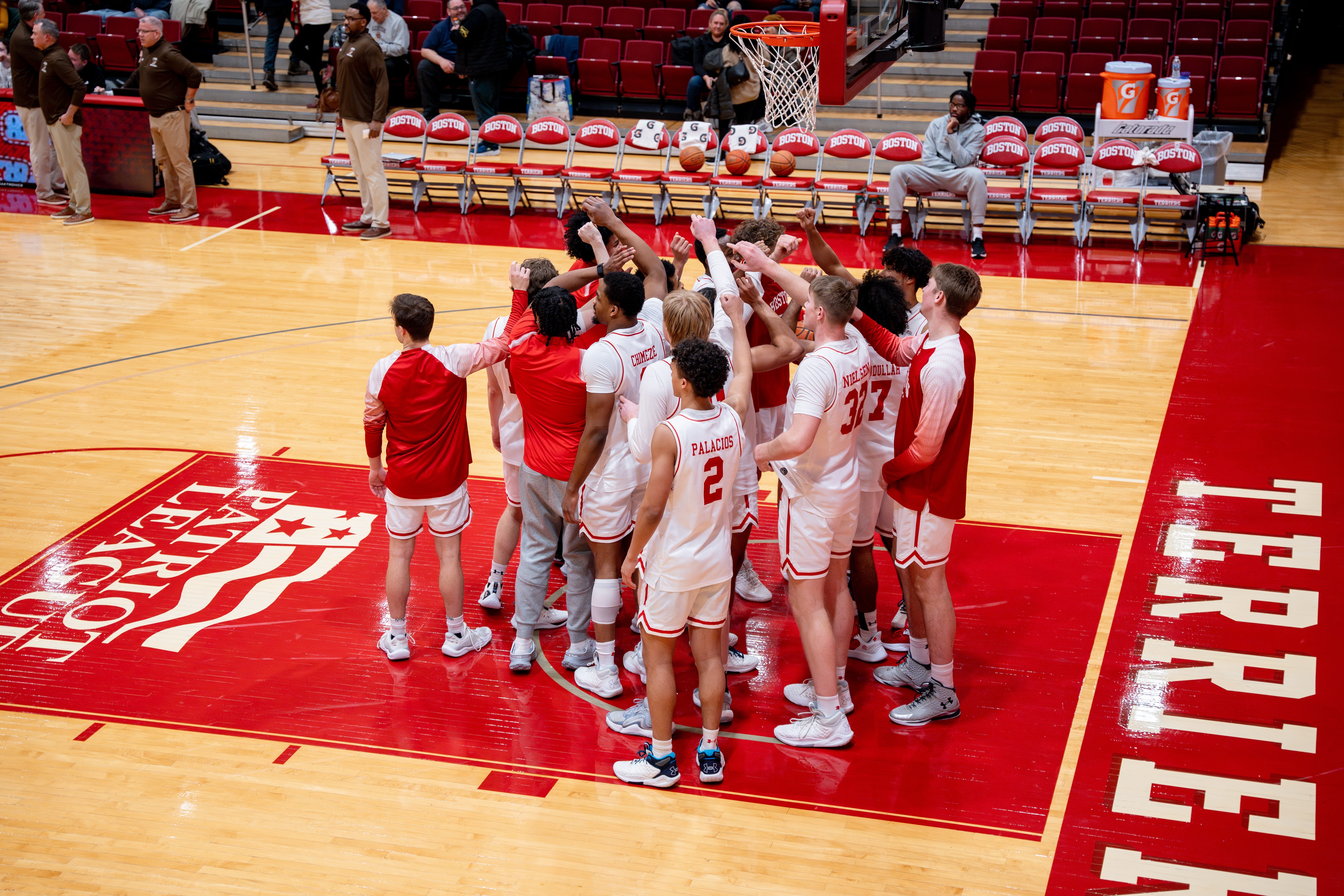
Accordingly, the recruiting strategy across the Patriot League is centered around selling the academic experience. PL coaches need players who value their degree and will thus be less inclined to transfer.
Eight out of the Patriot League’s 10 institutions have a sub-35 percent acceptance rate and a four-year graduation rate of 80 percent or higher. Five member schools boast an acceptance rate below 20 percent.
“In today’s climate, it’s especially important for our program to also identify student athletes and families that are really motivated by the high-end academic experience our school can offer,” says Reed.
“We always say that we’re focused on developing the whole person, and the athlete’s a part of that, but so is the student,” adds Quinn.
Academics are a major factor in player retention. Take Boston University graduate forward Malcolm Chimezie, for example, who opted to remain at BU for a fifth year to pursue a master’s degree in business management.
“I guess the deciding factor was really how great a school this was,” says Chimezie. “I didn’t want to risk dropping down a level academically.”
Retention also comes down to instilling a strong culture that connects with the student-athletes.
“I tell guys all the time, man, this is not a transactional relationship,” says Jones. “Outside of my family, those are the most important people in my life.”
But ultimately, if a good enough opportunity presents itself, it’s difficult for the Patriot League to compete.
Former Colgate point guard Braeden Smith was the PL’s Player of the Year as a sophomore in 2023-24. The Seattle native left for Gonzaga. In turn, the Raiders’ run of four consecutive Patriot League tournament titles was snapped.
“Braeden Smith, I love that guy,” says 15-year Colgate head coach Matt Langel. “But his departure, he can’t be replaced.”
Noah Williamson, the 2024-25 Player of the Year at Bucknell, departed for Alabama. Former Holy Cross guard Max Green, the conference’s Rookie of the Year last season, left for Northwestern.
Nine others — including three All-Patriot League selections — left for other Division 1 schools in the offseason.
“There are certain things you just can’t compete with, right?” says American University assistant coach Jackie Manuel. “If a program is offering six figures and you know that’s something that that kid needs. It’s hard to compete with that.”
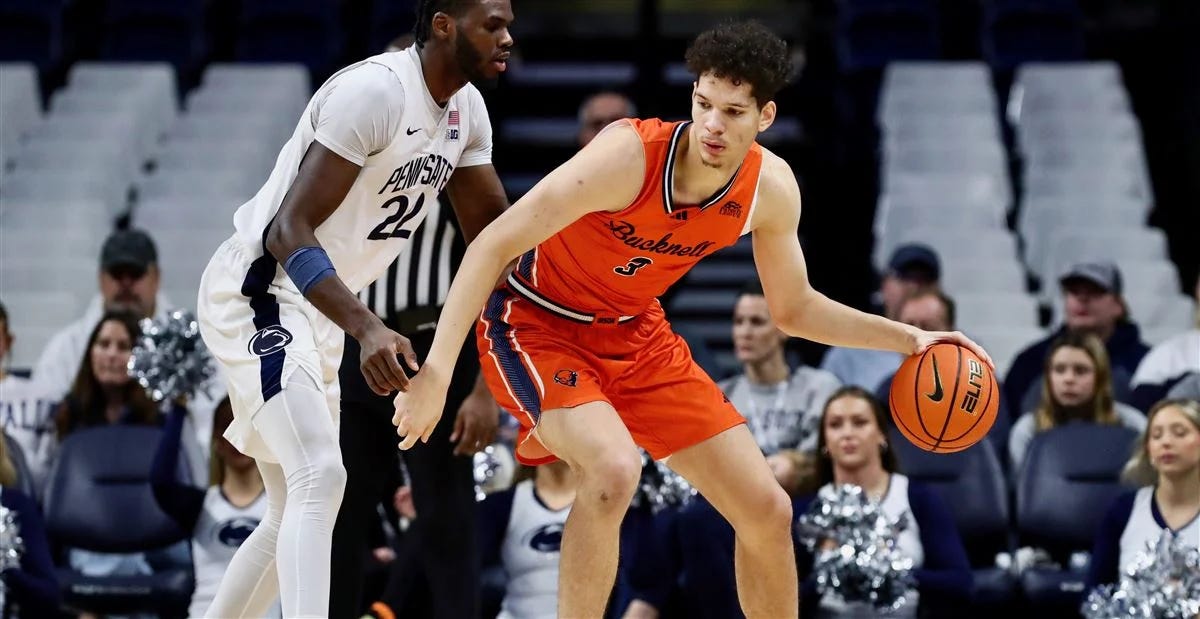
The Patriot League, once home to former NBA players including CJ McCollum, who famously led Lehigh to an upset victory over Duke in the NCAA Tournament, and Mike Muscala, who steered Bucknell to March Madness, may never see another league-bound player remain in the conference for his entire collegiate career.
“Lehigh had that great, great run and had some great teams, and it wasn’t just CJ, but would he have been around for all three of his years?” Langel questions.
“[Green was] on path to be a great, great Patriot League player. Noah Williamson was a great Patriot League player and had a chance to have one of those great Patriot League seasons, lead his team, and now that doesn’t happen,” Langel adds.
Jones is asked if he believes he could’ve retained the best player to play for BU in recent years, NBA G-Leaguer Javante McCoy (2017-22), in the current landscape.
“Challenging,” Jones says after a long pause. “I don’t want to sit here and say no, but it would have been challenging.”
Jordan Burns, Colgate’s then-sophomore guard, nearly led the Raiders to a first-round upset against 2-seed Tennessee in 2019, falling 77-70. Burns scored 32 points on 8 of 13 from 3. Volunteers head coach Rick Barnes was impressed, reportedly saying that he “would love to have that guy on my team.”
“In today’s day and age, he couldn’t really say that in the postgame press conference, but Jordan would’ve been recruited,” says Langel. “And to the tune of some of the money, he wouldn’t have finished his career here, and that would have changed the landscape of our program.”
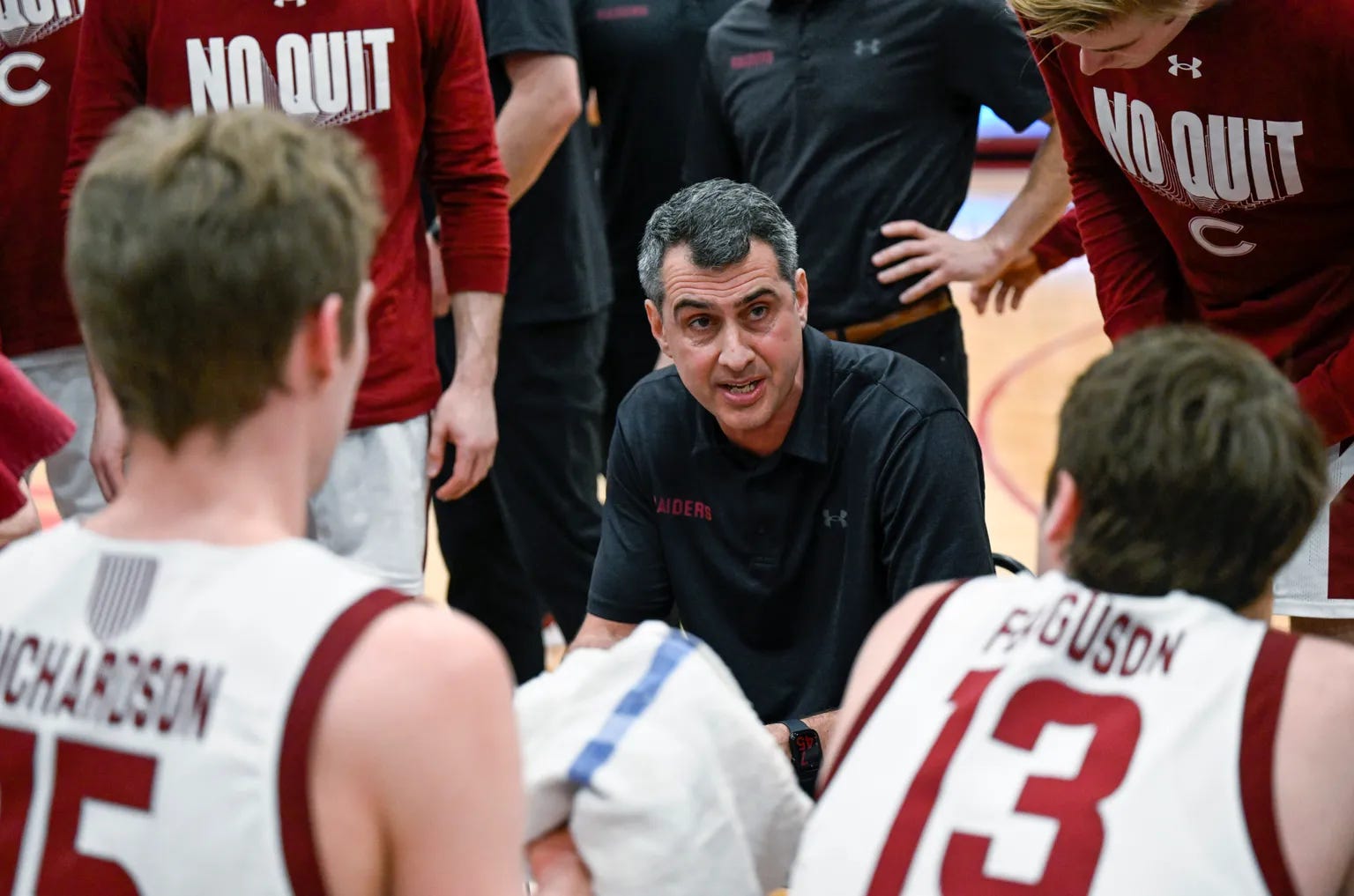
It’s a constant worry. Every team wants to develop its players to the fullest extent, but if a player becomes too good?
“They’re looking at our leagues, and they’re calling their coaches that are friends in our league, saying, ‘Okay, who are the guys I should be trying to steal from your league?’” says Jones.
And unlike other conferences across college basketball, schools in the Patriot League can’t simply replace players via the portal.
“At a place like BU with the academic requirements and getting transfer credits in here, restocking your roster every year with transfers isn’t always a viable option,” says Quinn.
“The ground isn’t the same,” adds Langel. “You’re not on the same footing as everybody else.”
Jones only utilizes the portal as a last resort, which he did three offseasons ago, bringing in two Division 2 transfers, guards Ethan Okwuosa and Ben Palacios, after graduating a handful of guards and losing two rising seniors.
“Say I lose a kid going into a sophomore year or lose a kid going into his junior year, we have to replace them,” Jones said. “But we try to stay away from that if we can.”
At the conference’s service academies, Army and Navy, any player transferring in needs to start over as a freshman and go through basic training, making incoming transfers incredibly rare.
While that can create continuity, as it has for the Midshipmen, Army and Navy are not protected from players transferring out after either of their first two seasons.
Army was hit hard this offseason when Josh Scovens, an All-Patriot League selection as a sophomore and an All-Rookie teamer as a freshman, transferred to Davidson, where he’s averaging 9.9 points on 51.5 percent shooting.
The Black Knights have no way of replacing him.
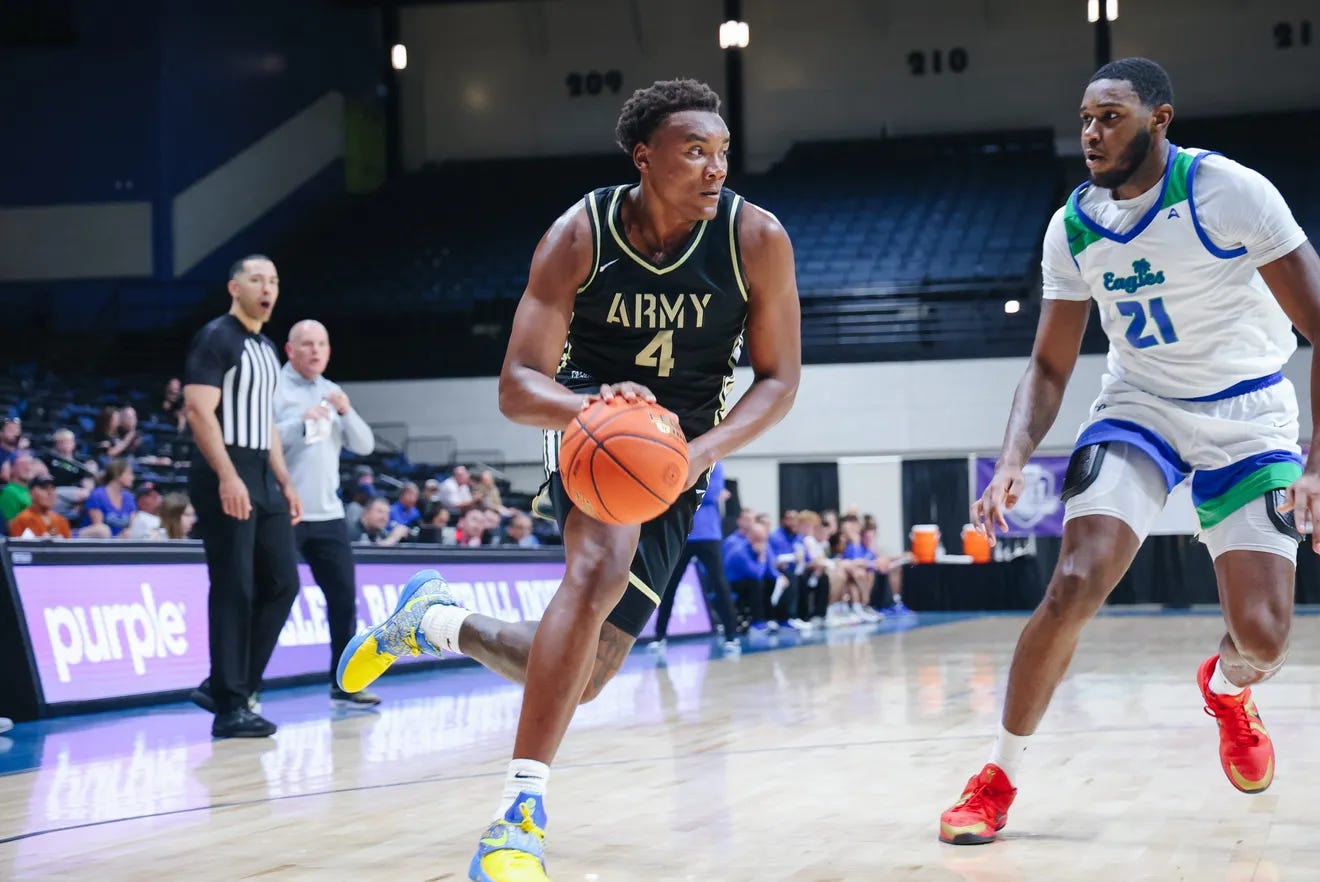
Those difficulties in bringing players make retaining players even more important.
Teams try to get to know a recruit and that recruit’s support system as best as possible to maximize the likelihood of retention. It’s not an exact science, but BU looks for athletes focused on academics who are willing to work through adversity and who discuss the importance of winning more than their own stats and playing time.
“When we have players who are bought into our program, they will be less likely to leave if they don’t get what they want on the court,” says Quinn. “There are 13 guys on a team. Not everyone is going to get what they want.”
Toeing the line of recruiting and retaining the best players can be a difficult one to manage. The best players will have the most opportunities to depart, but teams need good players to win games.
“We can’t shy away from recruiting the best players with a fear of them leaving,” Quinn says. “As long as they fit our program.”
And while the Patriot League’s coaches are in support of student athletes profiting off NIL, the unlimited transfer portal has raised major questions.
“I’m really concerned about the graduation rate,” Jones says. “I don’t know how you transfer three times, and you’re able to graduate? I don’t know how that happens.”
“If you go to three, four, or five different schools, I question what kind of degree, if you’re even getting a degree that you’re really getting, and that’s a shame in my mind,” Langel echoes.
The Patriot League has struggled to prove itself on the national stage for a long time. Colgate has come close to pulling off a first-round upset on multiple occasions, holding second-half leads over Tennessee in 2019 and Wisconsin in 2022, and a 14-point first-half lead over Arkansas in 2021.
However, the Patriot League’s last first-round NCAA tournament win dates back to 2012, when Lehigh, led by McCollum, upset Duke. And the gap between mid-majors and top power conference teams only continues to grow.
This season, the Patriot League ranks 27th out of 31 conferences in average net ranking. Last season, the Patriot League’s representative, American, was a 16-seed play-in and fell to Mount St. Mary’s.
And as the top talent gets plucked each year, it’s difficult to see a way forward.
“I’m concerned for our league,” says Langel.
“Our league, at different times, has been certainly in the top half of the NCAA. And we haven’t been, and we’re not projected to be, and I’m concerned that maybe we never will be again.”
Congratulations on such an informative and well-written story.
Great combination of stories and data! How about a follow-up on what coaches would recommend change?